ECO Project
Towards an international standardization of the Aromatogram
The ECO project (Essential Oil Cut-Off) was created to address one of the main gaps in research on essential oils with antimicrobial activity: the lack of shared methodologies and interpretive criteria that would allow the comparison of results obtained in different laboratories and support their evidence-based use.
Although numerous studies have demonstrated the antimicrobial activity of essential oils in vitro, the lack of standardization still limits the transferability of data to clinical practice today.
Building on the recent standardization of the Aromatogram developed according to the EUCAST guidelines (Di Vito et al., 2026), the ECO project aims to define the epidemiological cut-off values (ECOFFs) for essential oils. ECOFFs represent the threshold values that allow naturally susceptible microorganisms to be distinguished from those with reduced susceptibility to a given antimicrobial agent.
Project objectives
The first objective of the ECO Project is to define the epidemiological cut-off values (ECOFFs) for five bacterial species and one fungal species, using eight essential oils selected as the most active in the preliminary standardization phase and characterized according to ISO standards and/or in compliance with the monographs of the European Pharmacopoeia and the EMA (European Medicines Agency).
| Microbial species | Essential oils |
|---|---|
|
|
The values will be obtained by assessing the susceptibility of the microorganisms to the eight essential oils selected for their antimicrobial activity and characterized according to ISO standards and European monographs.
The data collected will also make it possible to compare strains of human and veterinary origin and to explore any differences associated with specific clinical populations.
How it works
The lead unit will produce and distribute standardized kits for performing the Aromatogram to the laboratories joining the network.
Through harmonized protocols, centralized production of materials and a dedicated web platform for data collection, the project will ensure the comparability of results between laboratories and the creation of a shared database supporting international research.
A project in evolution
The ECO Project was designed as a scalable and sustainable framework. Once the initial objectives have been achieved, the framework can be progressively expanded to include new microbial species, additional essential oils and new lines of research, fostering the expansion of the database and the scientific knowledge generated by the project.
An international network
The project currently involves 9 laboratories.
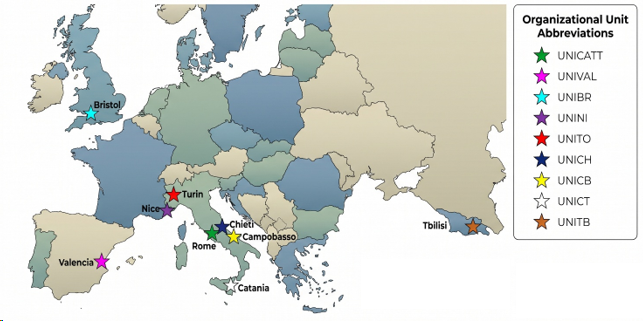
The network is continuously expanding.
Want to participate?
Clinical laboratories, research groups and institutions interested in supporting or participating in the development of the project can apply to join the ECO network.